
Therapy for Utah Women
For anxiety, people-pleasing, and how you feel about your body
Serving Women Online in Salt Lake City, Utah and Across the State
You've probably wondered if it's anxiety
You already know you're an overthinker who worries about what people think of you.
You replay conversations long after the situation is over, and you suspect it's anxiety.
What that explanation leaves out is that you're not worrying about nothing. You care about the people around you, you care about getting it right, and disappointing someone feels worse to you than almost anything else.
Anxiety and people-pleasing are the names for what you do, but they aren't the reason you do them. You learned it somewhere, in relationships that mattered to you.
The work we do together is figuring out where the people-pleasing started, what it was protecting you from, and why the thought of not doing it makes you so anxious.
What anxiety actually looks like for you
Your anxiety often doesn't look like panic attacks. It looks like being prepared and staying on top of things. You've probably talked yourself out of calling it anxiety more than once, because anxiety is supposed to look like someone who can't cope. You've decided the answer is to get better at coping.
The part you can't ignore is what it's doing to the people you love. Your relationship with your kids and your spouse matters to you more than almost anything, and you've started to notice the anxiety showing up there. You're shorter with them than you want to be, and you're not as present as you'd like to be, even when you're in the same room.
The anxiety hasn't felt like a problem, because it's been working for you. Worrying about things ahead of time has kept you prepared, and that preparation is why you've done well at school, at work, and in the things you've taken on. You've noticed recently that no matter how prepared you are, you still feel anxious, and you're more overwhelmed than you used to be.
I'm not going to give you breathing exercises. You've done that. Anxiety is almost always there for a reason, and yours will make sense once we understand where it came from and what it's been doing for you.
People-pleasing doesn't look like a problem
People-pleasing doesn't look like a problem from the outside. It looks like being kind and considerate. You're the one who reads the room, the one who keeps things from getting tense, the one who makes sure nobody leaves upset, and people have told you their whole lives that this is one of the best things about you.
What nobody sees is what happens afterward. You say yes and then spend the drive home wishing you hadn't. You keep how you actually feel to yourself because saying it might hurt someone, and then you feel something toward that person that you don't like feeling. It builds, and part of what worries you is what happens if it ever comes out.
You've probably already decided to stop doing this more than once, and it hasn't lasted. People-pleasing has helped you in some way. Understanding what it's been doing for you is the part that makes a difference, along with getting more comfortable with someone being disappointed in you.
Body image takes up more of your day than you'd admit
You compare yourself to other women constantly. The ones you know and the ones on your phone. You skip the pool, you stay out of the photo, you put makeup on before you leave the house in case you see someone. Underneath all of it is the belief that if you could just change your body, this would stop.
You think about your daughter struggling with her body the same way you have. You watch what you say in front of her, you try not to let her hear you criticize yourself, and you're still afraid she'll end up feeling the way you do.
What we work toward is different from what you've probably tried. Being able to get through a day without thinking about how you look every hour of it, and being able to treat yourself with the same compassion you give everyone else. Most of that work is understanding where the criticism came from in the first place.

Changes clients often begin to notice
→ You get through the day without wondering how you came off to people, you're really there with your family at night, and you're not the only one holding everything together.
→ You say no without spending the rest of the day feeling guilty about it, you're honest with someone even when it might disappoint them, and you don't take it back an hour later.
→ You stop waiting until you like your body to do the things you want to do; you stop comparing yourself to every woman in the room; and you go most of a day without thinking about your body at all.
→ You finally understand where the anxiety and the people-pleasing started, and you don't have to keep doing it. Not for another year, not for the next twenty.
You might be talking yourself out of therapy
You might be thinking that other people have it worse than you do, or that you should be able to work this out without paying someone to help you. You're functioning well enough, nothing is falling apart, and it's hard to justify therapy for something you're technically handling.
You might also be wondering what happens if you stop feeling as anxious as you do now. It may feel like the worrying is what keeps you on top of everything, and you're not sure how you'd get it all done without it.
You're exactly the kind of woman I love working with. Functioning well and feeling well are two different things, and you don't have to be falling apart for therapy to be worth it.
A Utah therapist who understands anxiety, people-pleasing, and body image
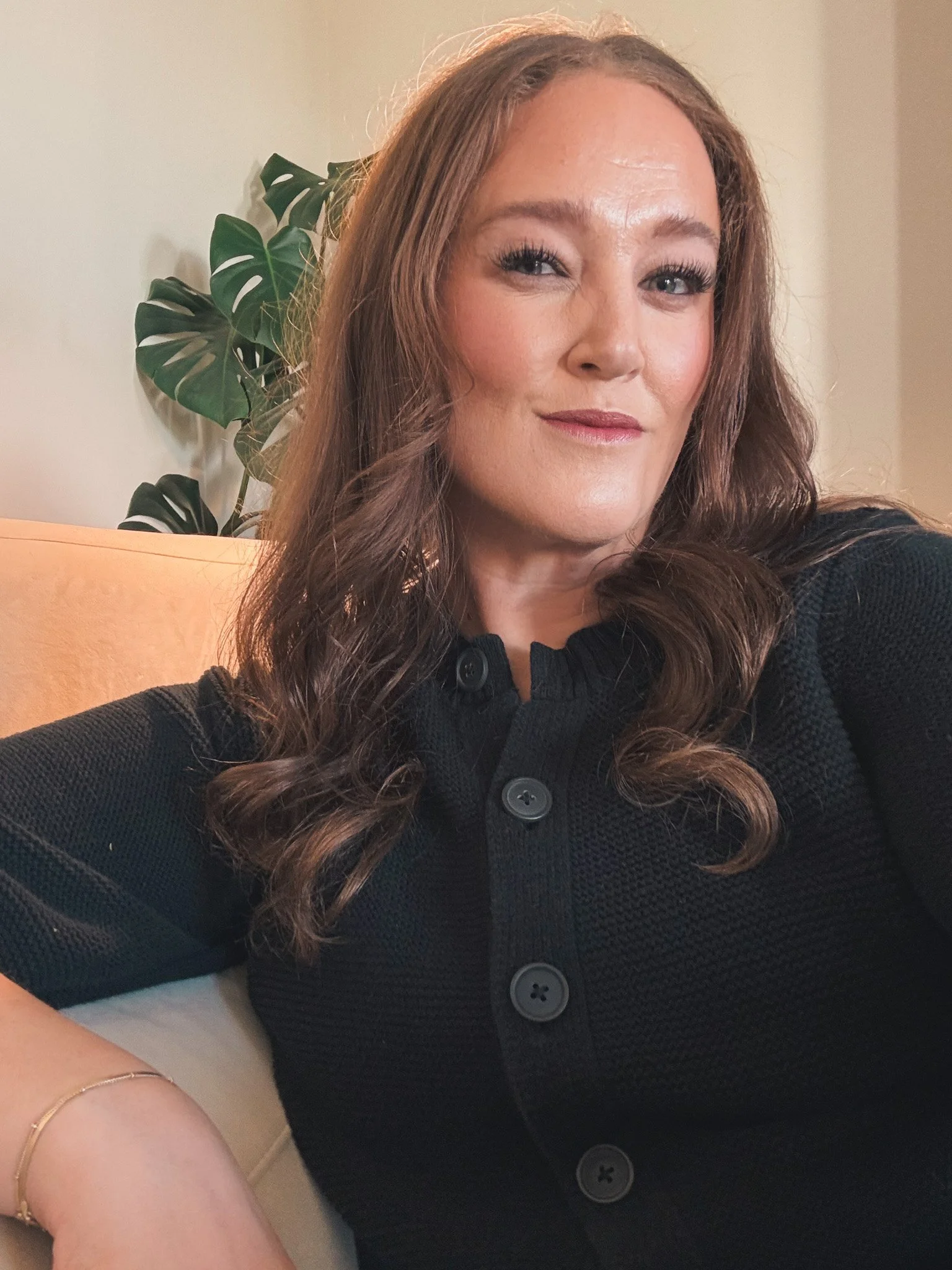
After thirteen years as a therapist, I've narrowed in on what I do best. I work with women across Utah on anxiety, people-pleasing, and how they feel about their bodies. Early in my career, I kept meeting women who had already been suffering for a long time before they got any help. I wanted to reach them before it got to that point.
How to Start Online Therapy in Utah
Getting started is easy:
Schedule a free consultation
We'll talk for fifteen minutes about what's been going on and whether working together feels right.
Start online therapy
Join weekly sessions from the privacy and comfort of your own home.
3. Start noticing the difference
You go to bed without replaying the day. You say no, and it's over by dinner. You get through an afternoon without checking how you look.
Rates, Insurance, and What to Expect
I’m upfront about therapy pricing because you deserve to know what to expect before we meet. Here’s everything you need to know about session rates, insurance, and payment options.
Session Rate
$175 per 50-minute session
I specialize in working with high-achieving, anxious women navigating people-pleasing, body image concerns, and anxiety. My rate reflects the level of support and depth of care I provide.
A note About Cost & Insurance
I know therapy is an investment, and it’s normal to have feelings about the cost.
I don’t take insurance because it requires me to diagnose you and share that diagnosis. Once a diagnosis is in your medical record, it can affect things like life insurance. I’m not willing to put that at risk for anyone I work with.
Private pay keeps your therapy completely private:
• No diagnosis required
• No limits on how we work
• No one is reviewing your personal information
I also understand the rate can feel like a sacrifice. That’s understandable, and I totally get it.
Cancellation Policy
Cancellations with less than 48 hours’ notice will be charged the full session rate.
Out-of-Network Benefits
Many clients use out-of-network benefits to receive partial reimbursement for therapy. If your plan offers these benefits, I can provide a superbill for you to submit.
Questions to ask your insurance:
Do I have out-of-network mental health benefits?
What percentage is reimbursed?
Do I have a deductible?
How do I submit superbills?
Frequently Asked Questions
-
I'd plan on six months of weekly sessions to start with. That might feel like a big commitment, and I understand that. You've been carrying this for a long time, and giving it real time and attention is what makes the difference between feeling a little better for a while and things actually changing.
-
Yes. You're allowed to want help with this, even if things look okay from the outside, and even if you can think of ten people who have it harder than you do. You don't have to wait until it gets worse.
-
All of them. Since sessions are online, I work with women in Salt Lake City, Provo, St. George, Logan, Cedar City, Park City, Heber City, and small towns across the state.
-
I don't. Insurance requires a diagnosis to go in your medical record, and that can sometimes affect things later in ways that are hard to predict. I'd rather keep that decision in your hands. I'm happy to provide a superbill if you have out-of-network benefits.
-
$175 for a 50-minute session.
Specialized Online Therapy in Utah for Anxiety, Eating Disorders, and Body Image
These are the main ways I support women in Utah through online therapy, with a focus on anxiety, eating disorders, body image, and trauma.
Online EMDR Therapy in Utah (Trauma Therapy via Telehealth)
Reprocess trauma and find relief from what’s been keeping you stuck. EMDR helps your brain heal so you can move forward, and it works beautifully online.
Online Eating Disorder Therapy in Utah
You don’t have to keep fighting food and your body. Get expert help for eating disorders from home because recovery shouldn’t depend on where you live.
Online Binge Eating Disorder Treatment in Utah
Shame doesn’t heal anything, but compassion does. Online binge eating therapy helps you rebuild trust with your body without judgment.
Online Anxiety Therapy in Utah
You’ve spent years overthinking every decision. Learn to quiet your mind and breathe again, from wherever you feel most comfortable.
Online Body Image Therapy in Utah
Stop waiting until you “fix” your body to live your life. Online body image therapy helps you build confidence right where you are.
Online Therapy for College Students in Utah
College can be overwhelming in ways no one really prepares you for. Therapy offers a place to work through your stress, sort through the pressure, and feel better while you’re figuring things out.